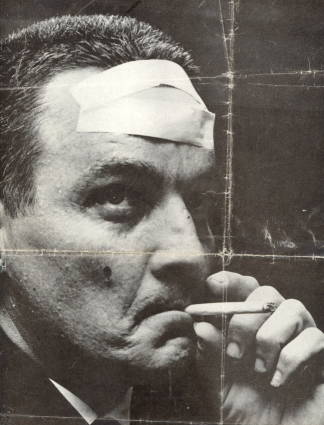
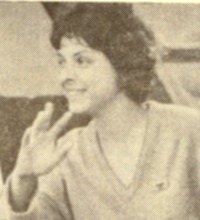
Richard M. Miskimen: Airman’s wife tells of tragic loss

At the time of the ditching of Flying Tiger 923, September 23, 1962, Dorothy Neisen was married to Air Force Staff Sgt. Richard McMunn Miskimen. She and Richard were living in Zemmer, Germany near Spangdahlem AFB with their only child, three-year-old Karen. He had joined the Air Force in 1954 and was an F-105 mechanic. He was on his way home from a temporary duty assignment in the States.

Karen and Richard met five years before the tragedy through a happy coincidence as many first meetings occur. She had been out with a girlfriend to see a Pat Boone movie “ April Love.” They stopped at a local restaurant for a soft drink.

AF Staff Sgt Miskimen

AF Staff Sgt Richard Miskimen

There were two airmen in the restaurant from Moody AFB, near their town of Valdosta, Georgia. The airmen tried

to talk to them, but she says, “Of course, we ignored them. We soon left and the airmen got in their car and drove along side of us as we walked. They kept talking and tried to get

us in the car, but we made excuses. This went on for about eight blocks. When we got in sight of my aunt’s house, we decided it was safe to get in the car! They introduced themselves and took us the rest of the way home.”

Karen tells more about their courtship and marriage which, for them, ended in the teeming North Atlantic.
Continue reading

Posted in passengers | Tagged , , , | 8 Comments

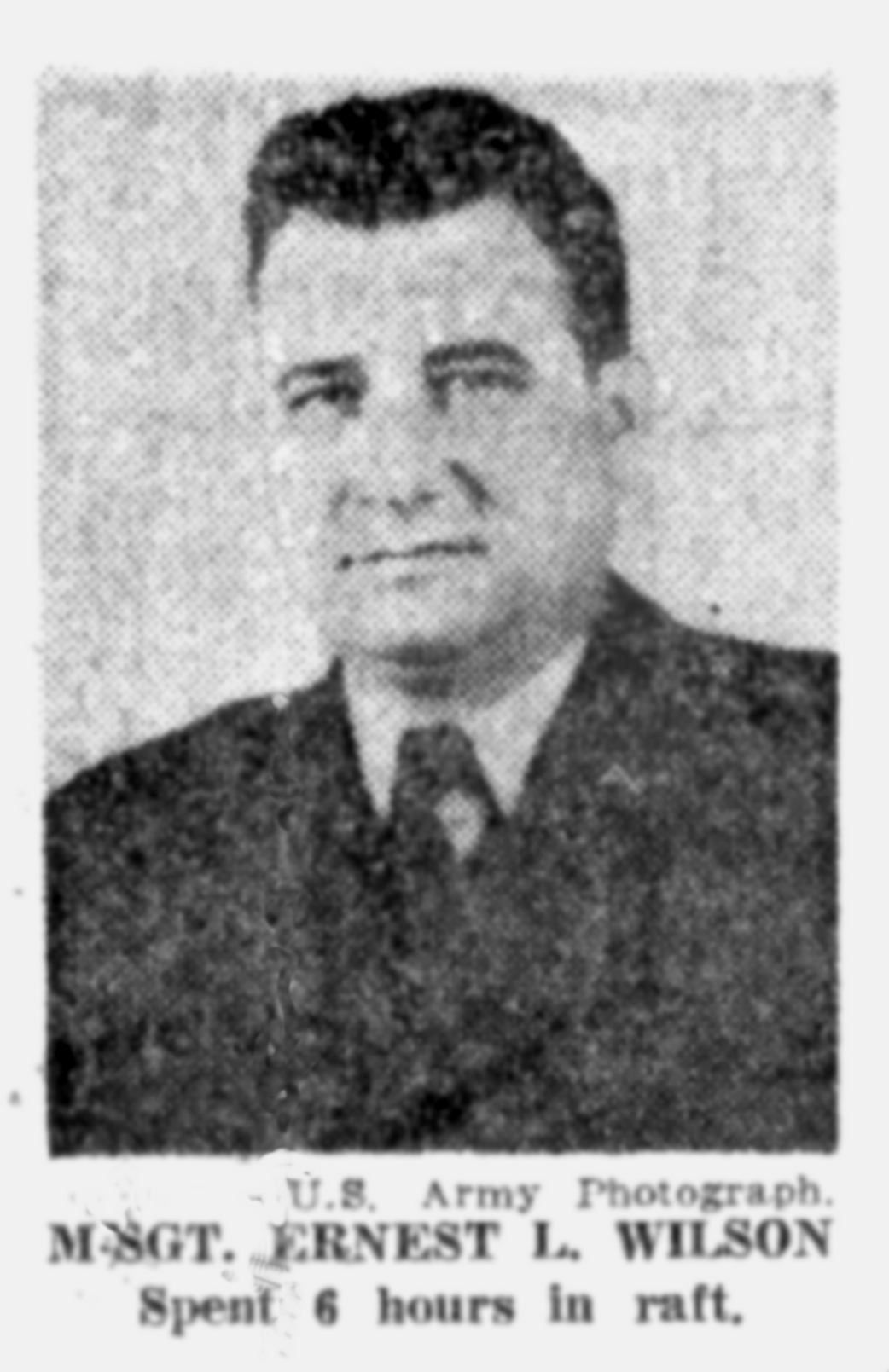
Ernest Wilson: Recounts injuries and cold ocean drama.

At age 37 and a World War II veteran, Master Sgt. Ernest L. Wilson of New Orleans, was on his way to a new two-year assignment to an M.P. Station near Frankfort, Germany. That trip ended abruptly when the aircraft in which he was flying ended its trip in a mid-sea ditching, taking with it 28 other passengers andM-Sgt Wilson saving him along with 47 others. That was Flying Tiger Flight 923 on September 1962.

M-Sgt. Wilson went home on medical leave soon after the incident and was interviewed by the Times-Picayune newspaper of New Orleans.

Sgt. Wilson was alone that fateful day. His wife, Margaret, and their children stayed at home in the states because this new tour of duty was to be only two years instead of the three years of a tradition assignment in the past. He didn’t want to leave his daughter, who was soon to give birth, and take another daughter, Barbara Jean out of school, as she had just began her senior year in New Orleans.

The Picayune newspaper interviewed him in a question and answer format, with the first question being “What happened?”

Continue reading

Posted in passengers | Tagged , , , , , , | Leave a comment

Ditching of Flight 923 is an Atlantic ‘First’

Philadelphia Enquirer, Tuesday morning, Sept. 25, 1962 – “Sunday night’s ditching of a Flying Tiger Constellation off the coast of Ireland was the first successful “controlled” water landing in the Atlantic by a U.S. scheduled airline since the carriers began to fly land-based transports over the route 16 years ago.

“There have been several ditchings in the Pacific, including an apparent one that cost the lives of all 36 passengers and a seven-man crew. Involved was a Pan American Word Airways Stratocruiser which disappeared Nov. 8, 1957, on a flight fro from San Francisco to Honolulu.

“Only a few bodies and very little wreckage were found. But the victims were wearing life jackets, indicting that there had been advance warning of trouble and a likely ditching attempt.

“The two most successful airliner ditchings also occured in the Pacific. The first was on Oct. 16, 1956, when Capt. Richard Ogg of Pan Am added a crippled stratocruiser in smooth water with not one of the 24 passengers and seven crewmembers even getting their feet wet.

“A Northwest Orient Airlines DC-7C with 58 passengers and a crew of seven ditched off Luzon in the Philippines July 14, 1960, There was only one fatality—an elderly woman passenger who died of shock and exposure.

“Ditching a large aircraft is regarded as one of the most difficult maneuvers in aviation. A plane hitting the water is exposed to greater shock forces than if it crashed on a cement runway.

“Most successful ditchings have taken place in relatively smooth water. Landing in choppy seas calls for  the utmost skill.    

 [Note to readers: A crewman on the Celerina, 19 year old Pierre-Andre Raymon, on the very same day of the ditching, Sep. 23, 1962, took film of the raging seas to show his family and friends. He did it with old Brownie 8 mm motion picture camera. To see what those seas looked like (and they got worse that day), click this link:  http://www.youtube.com/watch?v=U6wqjzs40EE&feature=g-upl . For information   on the photograper and his filming that day, click this link:
https://flyingtiger923.com/2012/06/16/video-raging-seas-of-the-north-atlantic/ ]

                                                *     *     *     *     *
[We greatly appreciate the Philadelphia Enquirer for providing us with this interesting and unusual story by way of Mrs. Karen Eldred-Stephan who lives with her husband in central Germany.  Karen sent us a number of newspaper articles collected by her father, Captain Robert C. Eldred (US Army Retired) who was a survivor. Her mother, Edna, died in the crash.]

Posted in Uncategorized | Tagged , , , , , , , | 5 Comments

Skip Davidson: I knew it was swim or die.

Pvt. Larry E. “Skip” Davidson, 19, of Manchester, Maryland, joined the skip1-x2Army in early April of 1962. He undertook the rigorous training in combat arms and then the techniques and methods of paratroopers who get into battle from the air. His entire paratrooper class got orders at graduation to ship out to a station in Germany. Reinforcements were urgently needed in the event that troubles with the Soviets got out of hand over the Cuban missile crisis and the Berlin wall.

The soldier’s mother, Mrs. Elmer Davidson, told a reporter “We didn’t even know Skip had left the country when we received the telegram from the adjutant general telling us he was among the missing,”. She and her family were shocked with the news.

Just two days before the Atlantic ditching of Flying Tiger Line Flight 923, Skip Davidson called home to tell his family that he thought he would be leaving by ship within a week.  He didn’t know any details.

The family was shocked to learn several days later that he was already gone. He didn’t leave on a ship. He left on a chartered four engine Lockheed Super Constellation. That aircraft never made it to Germany. It crashed in the raging North Atlantic Ocean some 500 miles off the coast of Ireland. Continue reading

Posted in new combat troopers | Tagged , , , , , | 7 Comments

A watery grave was not to be — the Henrich family

Most likely the pilot and crew didn’t see the desperate mother and three children standing on the tarmac with the Military Police. They were waving frantically, trying to get their attention. If the pilot and crew did see them, they probably thought they were a loving family wishing one last farewell and determined to see the aircraft off until it disappeared as a tiny dot in the darkening eastern sky.

Whatever the reason, Elizabeth Anna-Marie Henrich and her children, Gerald, 8, Frank, 4, and infant daughter Doris, 6 months, felt abandoned, alone and deeply grieved over missing the aircraft that would have taken them to the long awaited reunion with the head of their household, Sgt. First Class Richard Henrich, of the 54th Engineering Battalion, near Fleken, Germany. He was awaiting their arrival at Rein Main Air Base at Frankfurt, Germany.

They almost made it, just shy of less than 10 minutes, but the plane would not stop to let them board. They waved for as long as their arms and hands held out. Continue reading

Posted in Uncategorized | Tagged , , , | 1 Comment

John D. Murray: Fate of 76 lives in Captain’s hands

Capt. Murray

Capt. Murray

This article was previously published on November 11, 2011, soon after the launching of our memorial blog. Since then we have had 39,805 views from around the world. Early readers may have forgotten details of Captain Murray’s story. New readers may have missed it completely. He is the man who held our lives, and his own life, in his hands. Read his challenge.
*     *     *     *     *     *     *     *     *

Captain John D. Murray, 44, of Oyster Bay, Long Island, knew 76 lives were at stake as he slowly brought down the Super Constellation in preparation for ditching in the howling winds and raging waves of the cold north Atlantic. Continue reading

Posted in flight crew, Other Gems | Tagged , , , , , , | 2 Comments

World Crises Build in September 1962

September, 1962, was an intense month around the world, politically and militarily. Major issues dominated newspaper headlines. Among them were the Soviet Union’s involvement with Cuba (leading to the Cuban missile crisis), continuing tensions around the Berlin Wall, and the domestic desegregation showdown in Mississippi. That came with the enrollment of James Meredith, at the strictly segregated University of Mississippi. On the global front, threats of the use of nuclear power as a means of enforcing demands were thrown about freely by both sides of the Iron Curtain, the United States and the Soviet Union. Military power was a final threat for the enforcement of domestic desegregation orders on the domestic front.

This article is an attempt to put the world of the day in perspective. You can imagine the pressures of the near call-up of reserves, the needs for an urgent military buildup in Germany and how they dominated the news media. There wasn’t much space for other news such as a “routine” air crash at sea.

What follows is a tightly edited version of the news of the day.

Sunday, September 1, 1962 Continue reading

Posted in Uncategorized | Tagged , , , , , , , , | 2 Comments

Forgiven Disaster: Carol Hansen and the Ditching of Flying Tiger 923

Carol Gould Hansen was the most visible of all survivors of Flying Tiger 923. She was pretty, full of energy, a natural leader, and always quick to flash a smile. She played a very important role in the well being of all fellow survivors. She was on her day off, but she was unexpectedly called to duty on the morning of Sunday, September 23, 1962. This is her story.

Carol Ann Gould

Carol Ann on the Celerina

A Forgiven Disaster:
Carol Hansen and the Ditching of Flying Tiger 923

Adapted from a presentation by John and Dawn Crotty

Carol was staying over night with a friend, Patty Johnson. They were jolted awake at 4:30 a.m. by an unexpected call from the back office of Flying Tiger Lines. “Carol, we just called your Mom, and she gave us this number to reach you. We need you to fill in for a stewardess who is sick. It will pay double time.” Continue reading

Posted in flight crew, Other Gems | Tagged , , , , , , , | 17 Comments

Betty Sims Cannin memorial is located in Michigan

There is a memorial stone in Downing Cemetery near Deckerville, Michigan with the following inscription:

Betty Sims Cannin
1930 –1962
IN MEMORY OF MY PRECIOUS WIFE
BETTY SIMS CANNIN. AIRLINE STEWARDESS,
WHO CRASHED AT SEA SEPTEMBER 23, 1962
JAMES CANNIN

Chief Stewardess Elizabeth Sims Cannin was named in most publications only as Elizabeth Sims. Before she died in the Atlantic crash landing, she told her family that the flight was to be her last. She told of her plans to leave flying when she visited relatives in Highland Park, Michigan. She said she had given the Flying Tiger Lines 30 days notice. She was married just two weeks before the crash and had told only but a very few of her closest friends. Her new husband, James, was a commercial pilot.

*     *     *     *     *     *
Brave Women Continue reading

Posted in flight crew, MEMORIALS | Tagged , , , , , | 9 Comments

George Christodal: One that got away!

George Christodal was an 18-year-old paratrooper with a slightly more privileged occupational specialty than the combat troopers aboard FT923. He was trained in cryptography (secret coding) as a matter of chance assignment, or as he would say, by the toss of the coin.

He was from a family of four, with two brothers and one sister. He hated school and he dropped out of high school in the 10th grade at 16 years of age. He waited for the day he could get out of Dodge. He felt he didn’t fit in with his classmates in Providence, Rhode Island.

It was not a matter of handling the academics. Continue reading

Posted in new combat troopers, Uncategorized | 7 Comments